WHY THIS RESOURCE MATTERS
Record hazards without turning a walk into a certificate
A general safety walk is a structured way to notice changing site conditions, talk with the people doing the work, and make sure hazards have a clear response. It is not proof that the site complies with every rule, and it should never replace task planning, competent supervision, or specialist inspection.
Prioritize exposure rather than appearance. Consider who could encounter the condition, how soon that could happen, whether an existing control is working, and what must be done before the work changes again. Workers should be able to explain practical constraints that are not obvious from a photograph.
CHECKLIST
What to include
- 01Access and emergency routes
- 02Housekeeping and trip hazards
- 03PPE use
- 04Work-at-height controls
- 05Electrical hazards
- 06Plant and equipment condition
- 07Fire protection
- 08Chemical storage
- 09Unsafe observations
- 10Corrective owner and due date
WHAT TO LOOK FOR
Hazard observations that need context
Access and movement
Blocked routes, uneven surfaces, open edges, vehicle interfaces, and changing work zones need location and exposure details.
Work at height
Record visible gaps in access, edge protection, openings, fragile surfaces, equipment use, or control of objects below.
Electrical exposure
Damaged leads, temporary supplies, wet conditions, open enclosures, and unprotected routes require immediate competent review.
Plant and materials
Unstable storage, moving equipment, lifting areas, poor separation, and trapped-access risks should identify the activity underway.
Control breakdown
Missing barriers, changed conditions, unclear permits, unsuitable PPE, or workers bypassing a control deserve a discussion, not just a photo.
FIELD WORKFLOW
How to use this template
- 1
Review the planned work, recent changes, permits, weather, deliveries, and high-risk activities before deciding where the walk should focus.
- 2
Observe the task from a safe position and speak with workers about how the job is actually being performed and what could change the risk.
- 3
For each hazard, record the exposed people, existing control, immediate action, responsible supervisor, and evidence that the area was made safe.
- 4
Look for repeated themes across findings and feed them back into planning, briefings, equipment decisions, and the next targeted inspection.
PRIORITY GUIDE
Base escalation on current exposure
Stop and make safe
Use when the condition presents an immediate credible danger and work or access needs control by an authorized person.
Correct during the shift
Use for a clear hazard whose temporary controls are adequate only long enough to organize prompt correction.
Improve the system
Use for recurring housekeeping, planning, communication, or supervision weaknesses that require more than a one-off tidy-up.
FIELD EXAMPLE
Example: a cable across a shared route
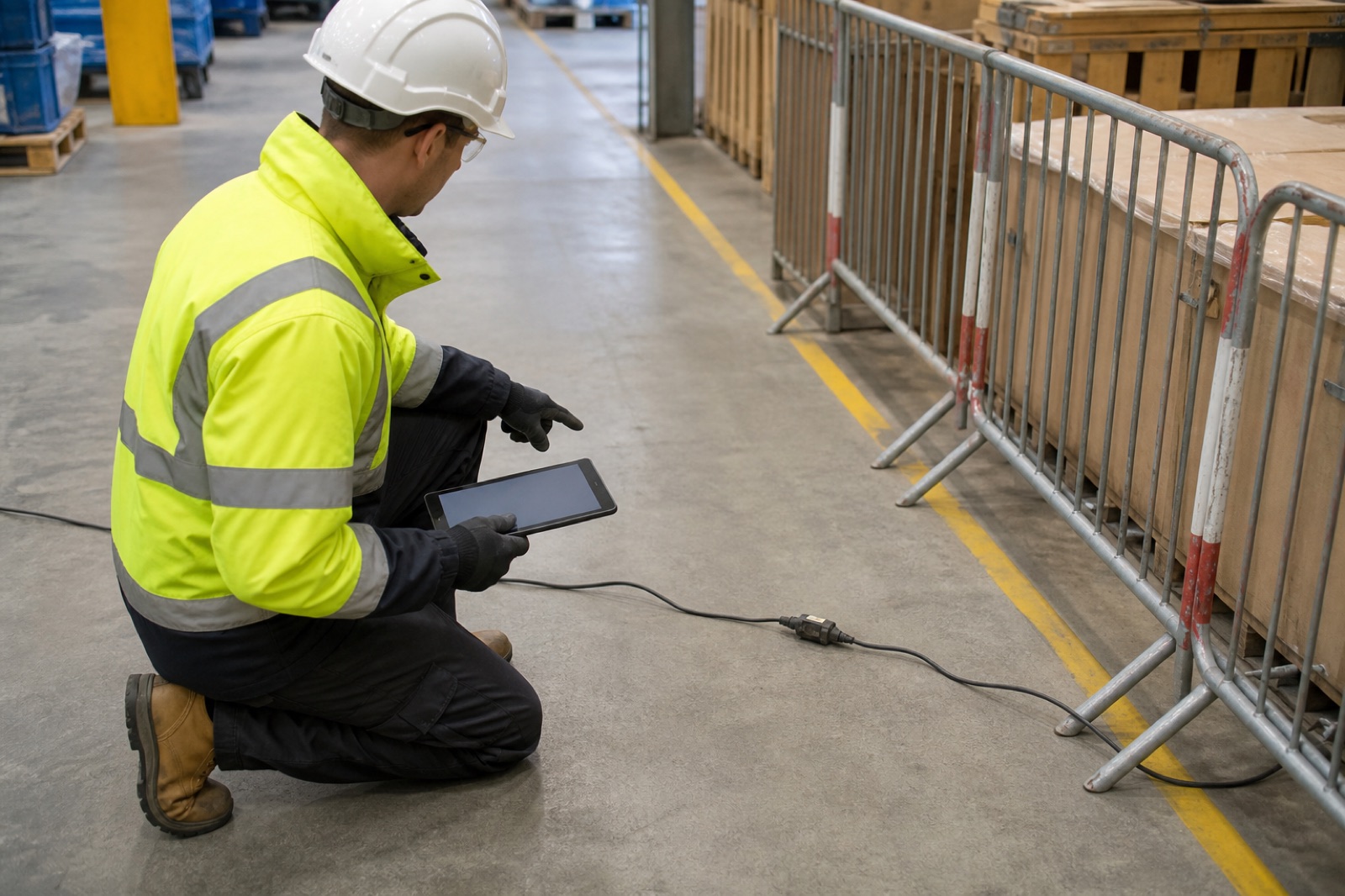
A lead crossing a warehouse walkway is more than a housekeeping note. Record whether pedestrians, pallet trucks, or both use the route; whether the cable is damaged; and whether the task can be isolated while a safer route is arranged. Photograph the wider traffic path, notify the responsible supervisor, document the temporary control, and verify the revised routing rather than closing the issue when somebody merely steps over it.
BEFORE YOU START
Adapt it to the job
Names, inspection frequency, acceptance criteria, retention rules, and sign-off responsibilities vary by project and jurisdiction. Remove irrelevant items and add the exact standards, drawings, specifications, and responsible people that apply to your work.
This is a general field aid, not a substitute for applicable laws, codes, or a competent safety professional.